
Choosing the best time to visit Skaftafell
The best time to visit Skaftafell is the period that fits your main activity and leaves room to respond to conditions. A long high-level walk, a shorter waterfall route and a guided glacier outing are different days. Start by deciding which matters most, then build a flexible journey around it. A season name alone does not tell you whether a particular trail is suitable on your date.
For higher walks, spring thaw is an important limit. For winter travel, usable daylight and the road journey become central planning questions. Glacier activities have their own options and meeting arrangements. Keep these decisions separate instead of expecting one month to offer every route and activity in the same form.
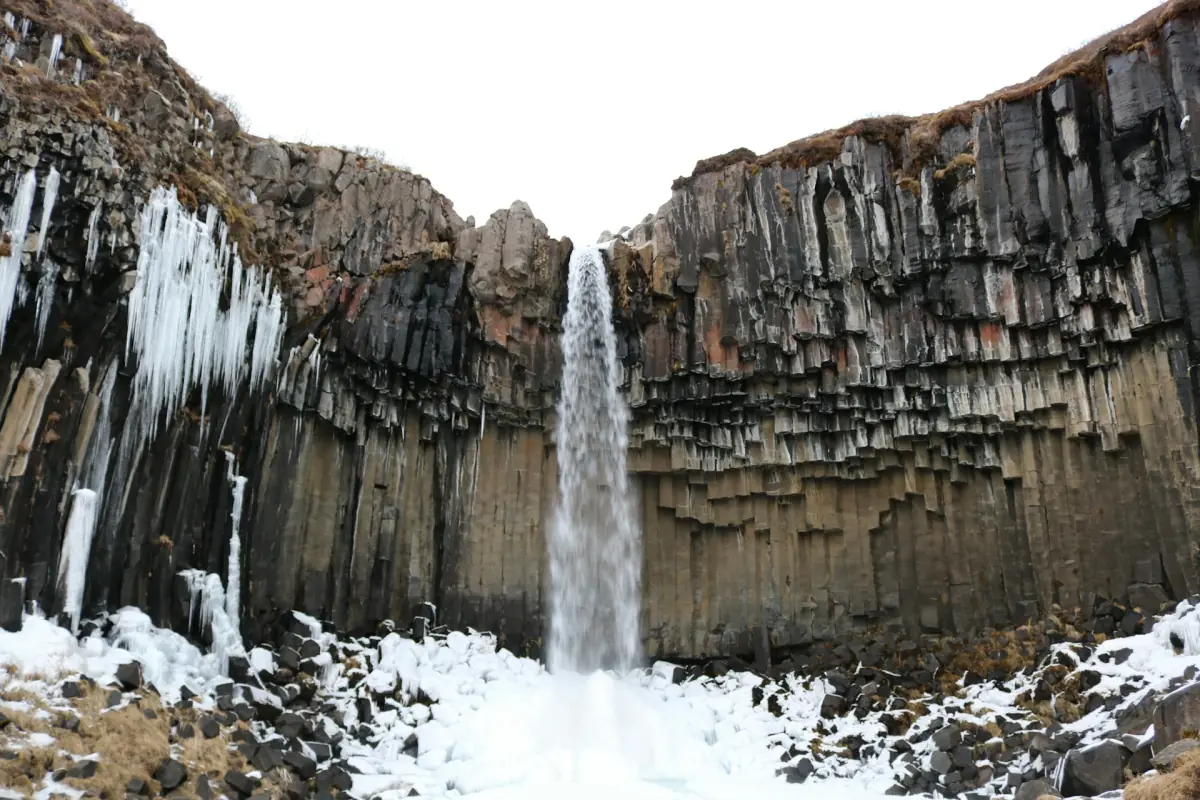
Skaftafell weather and the height of your walk
The park describes spring conditions on Skaftafellsheiði and Kristínartindar as potentially impassable because of thawing, wet or muddy ground. These difficulties can extend into June. Treat that as a seasonal planning issue, not a fixed opening date. Ask for current trail advice at the visitor centre and be ready to replace a high route with another suitable walk.
The hiking guide separates the longer routes from shorter outings. For the waterfall, use the dedicated Svartifoss guide: wet paths can be slippery, and snow or ice may affect winter footing. Choosing a shorter walk still means dressing for the conditions and allowing enough time to return before darkness.
Carry warm layers with windproof and waterproof outer clothing, a phone and a map. For longer outings, take an offline map and additional battery power. Read the day's weather rather than using a photograph of green hills or snowy basalt as a forecast. Choose the route after considering conditions, your experience and the daylight available.
A seasonal glacier option
This guided walk offers a cave visit only with its winter option; check the option before booking.
Hand-picked tours, booked through GetYourGuide. Prices are indicative starting prices in euros (as of October 2026). Tap a tour for live availability and the current price in your currency.
Choose a glacier walk or winter cave option
This activity includes a certified glacier guide, necessary glacier equipment and transport from Skaftafell to the glacier edge. The ice cave belongs to the winter option; the starting price can apply to a glacier walk without a cave visit.
Daylight, driving and room to change the plan
In winter, limited daylight affects both the drive and the walk. Plan the journey, activity and return as separate parts of the day, with time for changing conditions. Do not use Reykjavík sunrise or darkness times as local Skaftafell timings. Set the day's route around the local light available rather than adding a long drive after an already full walking schedule.
Before every drive, consult road.is for the road situation, vedur.is for weather and SafeTravel.is for travel advice. Allow extra time and use suitable winter tyres and equipment. Four-wheel drive does not remove the risk of sliding on ice. Keeping your arrival plan flexible gives you more options than committing to a tight road connection immediately before a tour.
An overnight base chosen around the meeting point can simplify the morning. National park camping operates year-round, with only A and C used in winter. Choose that form of stay with its seasonal facilities in mind, rather than treating year-round operation as a statement about easy weather or unrestricted trail access.
Winter ice caves in brief
Natural caves change with weather and ice conditions, and the safe route is chosen for the outing. Enter glaciers and natural ice caves only with a certified local guide and appropriate equipment. A specific cave shape or colour cannot be promised. For the broader subject, see Vatnajökull ice caves. Keep the exact winter option distinct from a glacier-only booking.
Northern lights and evening plans
Northern lights need darkness and at least partly clear skies. Cloud cover is therefore as relevant as the activity forecast, and a forecast does not promise a sighting. Consider an evening sky watch as an optional part of your stay, with your daytime road and walking plans still taking priority.
For the wider seasonal context, use Iceland seasons and northern lights. Keep any evening plan compatible with the next morning's drive and activity. Leave room to rest rather than making a late night and an early long journey fixed parts of the same schedule.
Seasonal planning questions
Does June guarantee the high trails are open?
Spring thaw can affect higher routes into June. Current park advice and conditions determine the suitable walk; there is no fixed opening day to build your trip around.
Which option includes a cave visit?
The cave visit belongs to the winter option. A starting price can cover a glacier-only walk, so choose the activity option that matches your plans.
Can I count on northern lights during my stay?
Darkness and sufficiently clear skies are needed, and a sighting is never guaranteed. Treat the sky as an additional possibility rather than the fixed outcome of an overnight stay.