
Reading Skaftafell history in the landscape
Skaftafell history is easier to understand when its different timescales are kept apart. The basalt at Svartifoss records ancient cooling lava, the hillside farms reflect people adapting to rivers, and the national park belongs to a much more recent chapter. A walk here can bring those stories together without treating every rock formation as the result of the same eruption.
Skaftafell was a medieval estate and assembly place. During the middle of the nineteenth century, expanding rivers caused farms to be moved onto the hillside. That change gives the slopes a human history as well as a scenic role: the position of a farm was connected to the behaviour of the land around it.
Sel and the farming landscape
The turf house at Sel is part of the S2 walking circuit, alongside Hundafoss, Magnúsarfoss and Svartifoss. It offers a useful focus for a day that combines cultural history with the natural landscape. The circuit starts at Skaftafellsstofa and is listed as 5.8 km, with an estimated walking time of 2 hours and 250 m of elevation change.
Allow the route conditions to shape the visit. Steps, wooden platforms and stone stairs are part of the walk; wet surfaces can be slippery, and winter can bring ice and snow. The route's easy classification should be read alongside those features. The Svartifoss walking guide explains the circuit, while the hiking overview helps distinguish it from longer hillside walks.
Explore the glaciers today
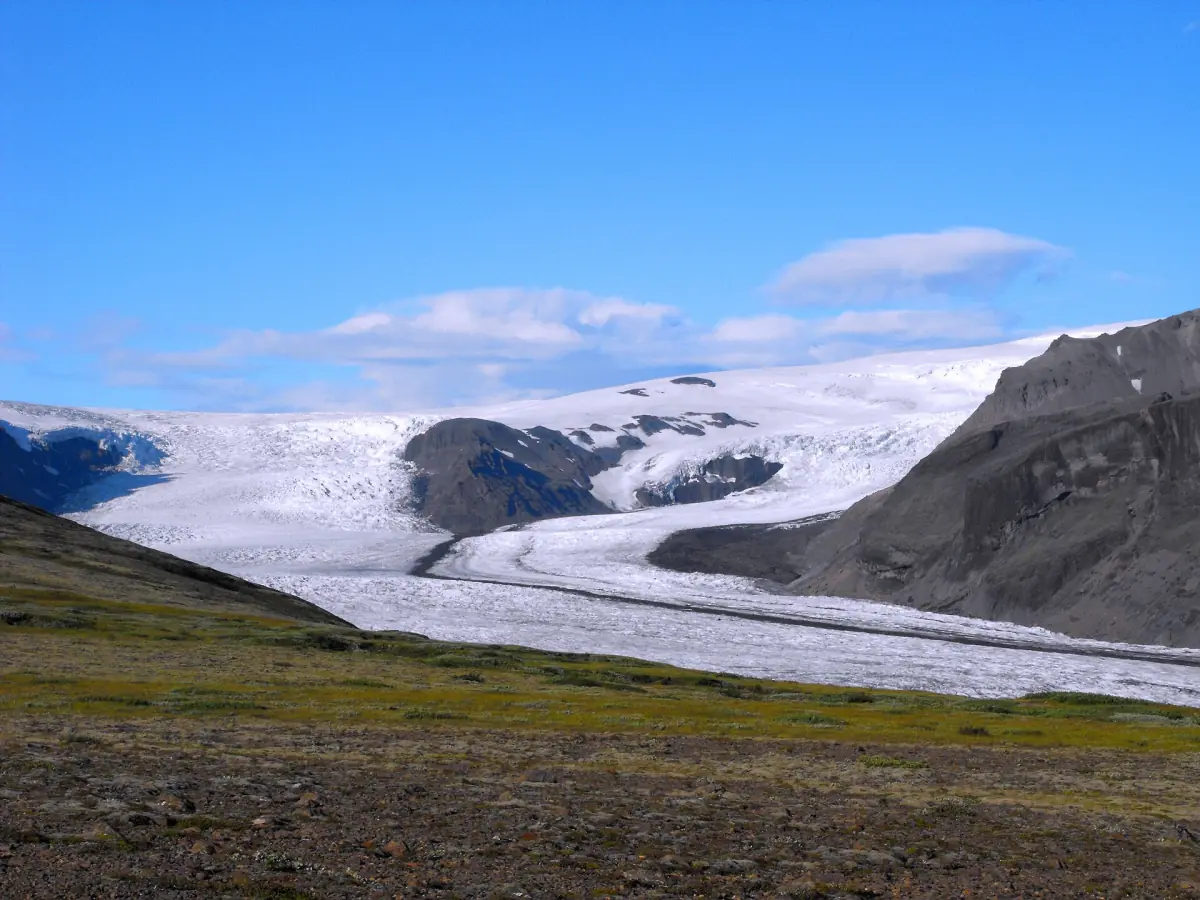
See Falljökull and Virkisjökull on a guided nature outing from Skaftafell.
Hand-picked tours, booked through Viator. Prices are indicative starting prices in euros (as of October 2026). Tap a tour for live availability and the current price in your currency.
Experience the glacier landscape today
A guided small-group hike on Falljökull and Virkisjökull explores the present-day ice landscape, with glacier equipment and a return 4x4 transfer from Skaftafell.
Öræfajökull and the basalt at Svartifoss
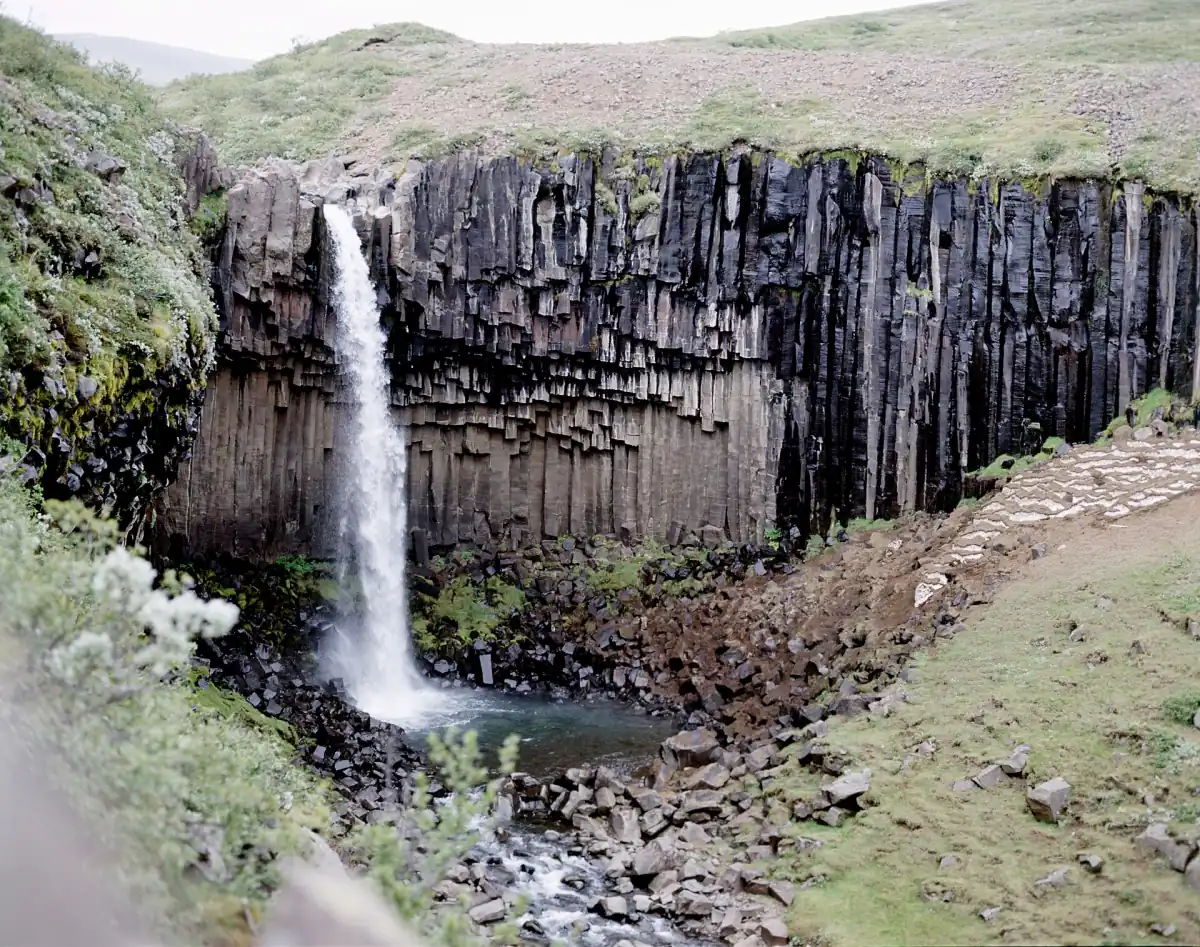
Öræfajökull erupted in 1362, destroying the settlement, and erupted again in 1727. These events belong to the area's volcanic history, but they should be separated from the formation of the basalt columns at Svartifoss. The columns formed about 300,000 years ago, when lava filled an old riverbed and slowly cooled, shrinking and cracking as it did so.
The waterfall makes that older rock structure visible. Looking at the columns is therefore a different kind of historical encounter from visiting Sel: one concerns geological processes, the other the use of the land by people. Neither requires turning a walking itinerary into a volcano ascent or interpreting old eruption dates as a forecast.
Glaciers and a changing setting
Skaftafellsjökull lies east of Skaftafellsheiði. In 1940, Skaftafellsjökull and Svínafellsjökull still enclosed Hafrafell. That historical reference helps put today's landscape into perspective. Glacier retreat and thinning also affect slope stability, but the change should not be reduced to a uniform annual distance or a predicted disappearance date.
For a closer encounter with the ice, the activity presented here lasts 330 minutes overall and includes a certified glacier guide, crampons, an ice axe, a harness and a helmet. The meeting hut is near the visitor centre, with visitor parking a short walk away. This is a contemporary nature activity on Falljökull and Virkisjökull; a history tour or visit to Sel is a separate part of the day. See glacier hikes for the distinction between walking on land and guided ice activities.
From a national park to World Heritage
Skaftafell National Park was established on 15 September 1967. It became part of Vatnajökull National Park on 7 June 2008, followed by World Heritage recognition in 2019. These are separate milestones: local protection came before incorporation into the larger park. The wider protected area is covered by Vatnajökull National Park.
The Skeiðará bridge dates from 1974 and belongs to the area's transport history. For today's visit, approach the Skaftafell service area from the Ring Road and road 998. Use the visitor centre for trail information and respect marked paths, wildlife and historic surroundings. Leave stones and plants in place. Enter glaciers and natural ice caves only with a certified local guide and suitable equipment.
Questions about Skaftafell's past
When did Skaftafell become a national park?
The national park was established on 15 September 1967 and incorporated into Vatnajökull National Park on 7 June 2008. World Heritage recognition followed in 2019.
Can a walk include Sel?
Sel is on the S2 circuit from Skaftafellsstofa. Plan around the full 5.8 km route and the conditions on the day, rather than treating the turf house as part of a booked glacier activity.
Did the recent historical eruptions create the Svartifoss columns?
The columns are much older. They formed about 300,000 years ago through the slow cooling and cracking of lava in an old riverbed.